

Why Story-Based Learning Can Make Complex Ideas Easier to Understand
Stories can make such concepts easier to approach by placing them within situations and experiences. Instead of simply explaining what attachment means
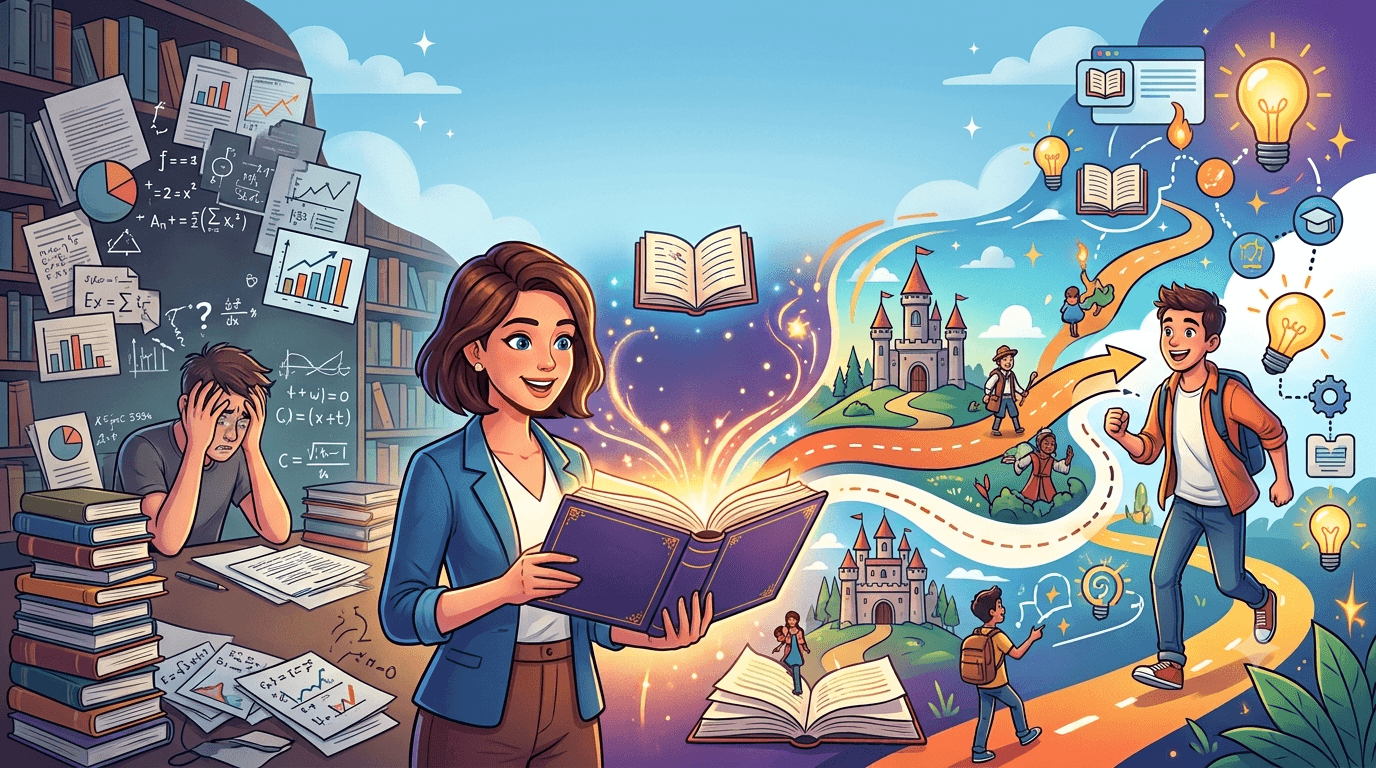
Learning does not always happen through memorising information, reading definitions, or listening to explanations. Some ideas are easier to understand when they are connected to experiences, emotions, choices, and situations that people can recognise. This is one reason stories have remained an important part of learning across generations. A well-told story can take an idea that initially feels complicated and present it in a way that feels familiar, meaningful, and easier to remember.
Chhahdhala brings timeless spiritual wisdom into a modern learning experience through animation and storytelling. Its approach presents meaningful ideas about the soul, self-awareness, conduct, desires, attachment, karma, and inner growth through engaging visual experiences. By using stories and animation, Chhahdhala creates an opportunity for people of different ages to explore deeper ideas in an accessible way.
Stories Give Meaning to Abstract Ideas
Some of the most important ideas in life are difficult to explain through definitions alone. Concepts such as self-awareness, attachment, inner peace, karma, and spiritual development can feel abstract when they are introduced only as theoretical subjects. A person may understand the words without fully understanding how those ideas relate to everyday life.
Stories can make such concepts easier to approach by placing them within situations and experiences. Instead of simply explaining what attachment means, a story can show a character becoming deeply attached to an outcome and then experiencing disappointment when circumstances change. Rather than only defining self-awareness, a story can show someone pausing to observe their thoughts, emotions, and reactions.
This movement from an abstract concept to a recognisable experience can make learning more meaningful.
Characters Help Learners Connect With Ideas
One of the strengths of storytelling is the presence of characters. People can observe what a character thinks, feels, chooses, and experiences. This creates a connection between the learner and the idea being explored.
A character may face a difficult decision, experience anger, become attached to something, or struggle to understand a situation. As the story develops, the audience gets an opportunity to observe the consequences of those choices.
This does not mean that the learner is simply being told what is right or wrong. Instead, the story creates space for reflection. People can ask themselves how they might respond in a similar situation and whether they have experienced something comparable in their own lives.
That reflective element can make learning more personal.
Stories Connect Knowledge With Everyday Life
Learning becomes more useful when people can see how an idea relates to their own experiences. A complex spiritual concept may initially appear distant from ordinary life, but storytelling can demonstrate how it appears in everyday thoughts and behaviours.
For example, attachment can be seen in the desire to control outcomes, relationships, possessions, recognition, or expectations. Desires can influence decisions, while emotions can shape the way people respond to situations. Self-awareness can begin with something as simple as noticing one's thoughts before reacting.
When these ideas appear naturally within a story, learners can begin to recognise them in their own lives. The concept is no longer something that exists only in a lesson. It becomes something that can be observed, questioned, and understood through experience.
Animation Adds Another Layer to Learning
Stories become even more engaging when they are combined with visual experiences. Animation can communicate expressions, environments, actions, and situations in ways that complement the spoken or written message.
Visual storytelling can be particularly useful when introducing ideas that may otherwise seem difficult to imagine. A carefully designed animated experience can help learners follow a sequence of events and understand relationships between actions and consequences.
For younger audiences, animation can make traditional subjects feel more approachable. For adults, it can provide a fresh way to revisit ideas that may have previously been presented through books or formal teachings.
This makes animation more than entertainment. When thoughtfully designed, it can become a medium through which meaningful ideas are explored.
Storytelling Encourages Reflection Instead of Memorisation
There is an important difference between remembering information and understanding an idea.
A learner may memorise a definition but still struggle to apply it to real situations. Stories can encourage a different type of learning by asking the audience to observe, think, compare, and reflect.
A story does not always need to provide an immediate answer. Sometimes the most meaningful learning happens when people are left with a question.
Why did the character behave that way?
What caused the conflict?
Could the situation have been handled differently?
Have I experienced something similar?
What can this teach me about myself?
These questions turn passive learning into active reflection. The learner becomes involved in the process of understanding rather than simply receiving information.
Stories Can Make Learning More Memorable
People often remember experiences and narratives because they contain a sequence of events. A beginning introduces a situation, characters encounter challenges, decisions create consequences, and the story moves toward a conclusion.
This structure can help ideas stay connected in the learner's mind.
A spiritual teaching presented as an isolated statement may be forgotten. The same teaching presented through a meaningful story may be easier to recall because it is associated with a character, situation, emotion, or outcome.
This can be especially valuable when learning ideas that people may want to revisit over time.
Story-Based Learning Can Connect Generations
Traditional wisdom is often passed from one generation to another through stories. Parents and grandparents have historically used stories to communicate values, experiences, and lessons about life.
Modern audiences, however, consume information differently. Digital content, animation, short-form videos, and interactive experiences have become important parts of everyday learning and entertainment.
Story-based digital learning can create a bridge between these worlds. It can preserve meaningful ideas while presenting them through formats that feel familiar to today's audiences.
This is particularly important because spiritual learning does not need to belong to only one age group. Children, young adults, parents, and older generations can all discover different meanings within the same story.
Stories Encourage Questions and Curiosity
Good learning does not always begin with an answer. Sometimes it begins with curiosity.
A story can introduce a situation that makes the audience wonder why something happened or what could happen next. That curiosity encourages people to continue exploring the underlying idea.
When stories present spiritual concepts in this way, learners can approach them naturally rather than feeling that they are being given a rigid lesson.
Curiosity can lead to deeper questions about the self, relationships, conduct, desires, choices, and the meaning of inner growth. Those questions can become the starting point for continued learning and reflection.
Spiritual Learning Through a Modern Lens
Timeless teachings can remain meaningful even as the way people learn changes. The central ideas do not necessarily need to become simpler or less profound simply because they are presented through modern formats.
Instead, storytelling and animation can provide another pathway into those ideas.
Chhahdhala uses this approach to bring spiritual learning into a contemporary digital experience. Through animated storytelling, meaningful concepts can be introduced in a way that encourages audiences to observe, understand, and reflect.
The purpose is not simply to make learning entertaining. It is to create an accessible space where timeless ideas can be encountered through stories that connect with human experiences.
Learning That Goes Beyond Information
The most meaningful learning often changes the way people see something. It may encourage a new question, a different perspective, or greater awareness of one's own thoughts and actions.
Story-based learning can support this process because it combines ideas with experiences. Instead of presenting knowledge as something separate from life, stories show how ideas can appear within choices, emotions, relationships, and everyday situations.
For spiritual learning, this can be especially valuable. Concepts such as the soul, self-awareness, karma, attachment, desires, and inner peace are not simply subjects to memorise. They can become opportunities for reflection and personal understanding.
Conclusion
Stories have the ability to turn complicated ideas into experiences that people can see, follow, question, and relate to. By introducing concepts through characters, situations, emotions, and consequences, story-based learning can make deeper subjects easier to approach without taking away their meaning.
Animation adds another dimension by making these experiences visually engaging and accessible to modern audiences. For spiritual learning, this combination can help connect timeless wisdom with the way people learn and engage with content today.
Chhahdhala brings this approach together by using animation and storytelling to explore meaningful ideas about the soul, self-awareness, conduct, desires, attachment, karma, and inner growth. In doing so, it creates an opportunity for every generation to discover that learning is not only about gaining information. Sometimes, learning begins when a story gives us a reason to pause, reflect, and look within.