

Why Every Generation Can Find Meaning in Timeless Teachings
Timeless teachings can offer this kind of opportunity because their themes often relate to questions and experiences that remain relevant as people move through different stages of life.
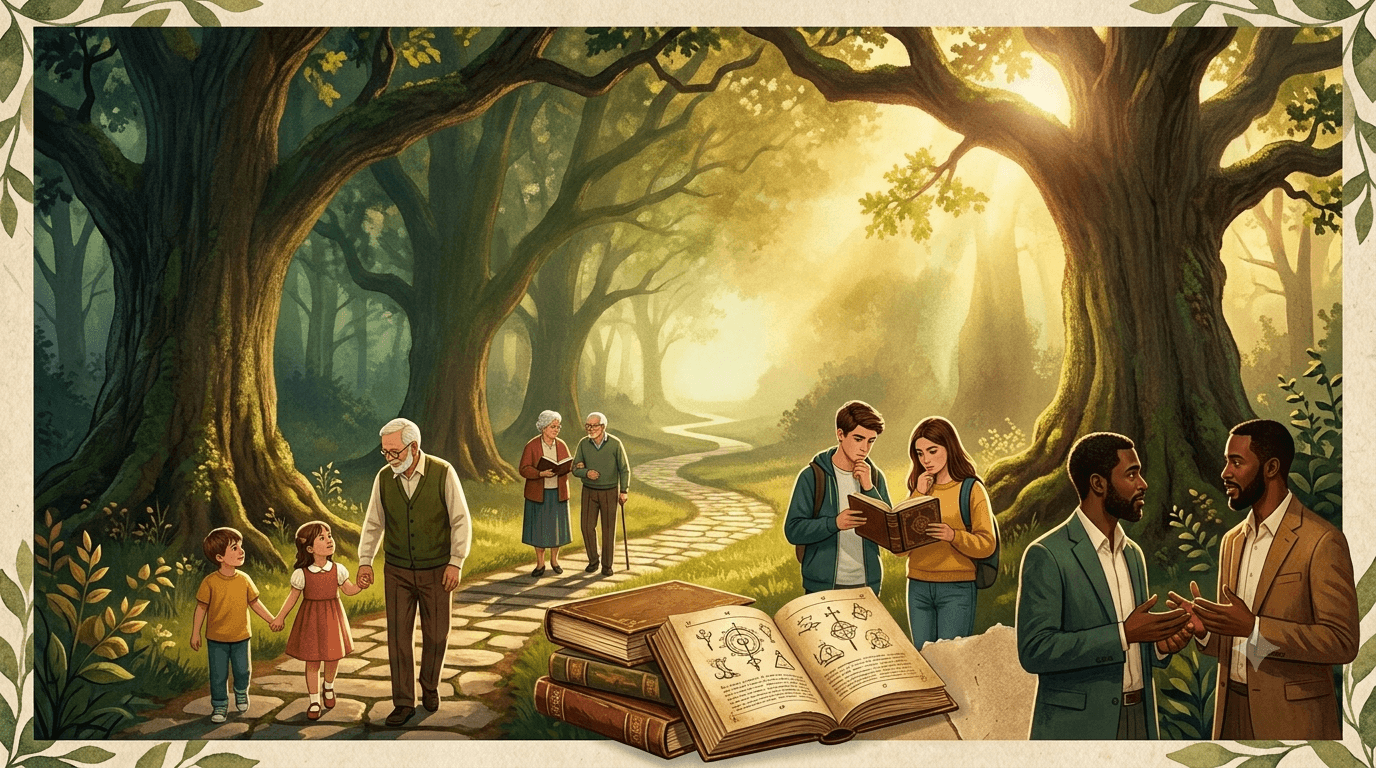
Learning does not always mean remembering information, definitions, or explanations. While knowledge can provide an important foundation, meaningful learning often begins when people are able to connect what they learn with their own experiences, thoughts, choices, and actions. When an idea encourages reflection, it can become more than something to remember; it can become something to understand and explore.
Timeless teachings can offer this kind of opportunity because their themes often relate to questions and experiences that remain relevant as people move through different stages of life. Ideas about the self, awareness, conduct, desires, attachment, and personal growth can be explored by children, young adults, parents, and older generations from their own perspectives.
Stories can make these ideas easier to approach. Through characters, situations, emotions, and experiences, storytelling can create a space where people can observe an idea and consider what it might mean in their own lives.
Why Timeless Teachings Remain Relevant
Some teachings remain meaningful because they explore experiences that people continue to encounter regardless of their age or circumstances. Questions about identity, choices, relationships, desires, reactions, and inner awareness can appear in different forms throughout life.
A young person may think about these ideas while learning about themselves and making important choices. An adult may encounter them through responsibilities, relationships, work, or changing priorities. Someone at another stage of life may reflect on the same ideas through years of experience.
The circumstances may change, but the opportunity for self-reflection remains.
This is one reason timeless teachings can continue to provide meaningful learning experiences across generations. Their value does not necessarily depend on belonging to a particular age group. Instead, different people can discover different perspectives within the same idea.
Learning Beyond Information
Information can introduce us to an idea, but understanding often requires something deeper. A person may know what self-awareness means without necessarily noticing how awareness influences their thoughts and actions.
Similarly, someone may understand the definition of attachment but not immediately recognise how expectations, preferences, or strong emotional reactions can appear in everyday situations.
Meaningful learning creates opportunities to move from knowing an idea to exploring it.
Instead of simply asking, “What does this teaching say?” a person can begin asking, “How does this connect with my experience?”
That shift can make learning more personal. It encourages people to observe their own thoughts, decisions, reactions, and habits rather than treating a teaching as information that exists separately from everyday life.
How Stories Make Teachings Easier to Explore
Stories have always provided a way to communicate ideas through experiences. Rather than explaining a concept only through definitions, a story can place it within a situation.
A character may experience desire, disappointment, attachment, uncertainty, conflict, or an important decision. As viewers follow the story, they can observe what happens and think about the choices made by the characters.
This approach can make abstract ideas easier to consider.
A story does not always need to provide an immediate answer. Sometimes, simply observing a situation can encourage questions. Viewers may begin considering whether they have experienced something similar or whether they might respond differently.
In this way, storytelling can create a bridge between timeless teachings and everyday experiences.
Connecting Wisdom With Different Life Stages
The same teaching can be understood differently at different points in life.
An idea may seem simple when first introduced, but its meaning can change as people gain new experiences. A person may return to the same concept years later and notice details that were previously overlooked.
For example, an individual may first encounter a teaching about attachment as an abstract concept. Later, personal experiences may provide a different perspective on how expectations influence thoughts and reactions.
This does not mean that one generation understands a teaching better than another. Instead, each person brings their own experiences to the learning process.
This makes timeless teachings adaptable. The central idea can remain consistent while the learner's perspective continues to develop.
Bringing Traditional Wisdom Into Modern Learning
Traditional teachings can sometimes feel distant when presented only through older forms of communication. Modern storytelling and digital formats can create additional ways for people to engage with them.
Chhahdhala brings timeless spiritual themes into a contemporary learning experience through animation and storytelling. By presenting ideas through visual narratives, it creates an accessible format through which different generations can explore meaningful concepts.
The use of animation does not change the underlying themes. Instead, it provides a modern way to introduce them.
Technology can therefore become a bridge between generations. It can help familiar ideas reach people who may naturally connect with visual storytelling, digital experiences, and contemporary forms of learning.
Why Animation Can Connect With Modern Audiences
Animation can communicate ideas through characters, expressions, environments, movement, and visual storytelling. These elements can make a subject feel more approachable while giving audiences opportunities to follow an idea through a narrative.
For younger audiences, animation may provide a familiar format for exploring meaningful subjects. For adults and older generations, it can offer a different presentation of ideas that they may already know or wish to explore further.
The important point is not simply that animation is entertaining. Its value can also come from its ability to present an idea in a way that encourages observation and discussion.
A visual story can provide a common starting point for people of different ages.
Learning Together Across Generations
Timeless teachings can also create opportunities for shared learning.
A family, for example, may watch a story together and discuss what different characters experienced. A younger viewer may focus on one aspect of the story, while an older viewer may notice another.
These differences can make the learning experience richer.
Conversations between generations can allow people to share their interpretations without requiring everyone to reach the same conclusion. One person may relate a teaching to a recent experience, while another may connect it with something they encountered years ago.
Learning can therefore become both personal and collective.
Asking Questions Instead of Simply Seeking Answers
Meaningful learning does not always require immediate answers. Sometimes the questions themselves create an opportunity for reflection.
A timeless teaching may encourage people to ask:
What influences the way I respond to situations?
Why do certain expectations affect me strongly?
How do my desires influence my choices?
What does self-awareness mean in everyday life?
How can I become more aware of my thoughts and actions?
What can I learn by observing myself more carefully?
These questions can be explored differently by people of different ages.
A child may approach a question with curiosity. A young adult may connect it with decisions and relationships. An older person may reflect on it through years of experience.
The question remains meaningful even though the perspective changes.
Connecting Teachings With Everyday Choices
Wisdom becomes easier to explore when it is connected with ordinary experiences.
Thoughts, reactions, relationships, expectations, and decisions happen every day. These experiences can become opportunities to consider ideas that might otherwise seem abstract.
For example, learning about attachment can encourage someone to observe how strongly they react when an expected outcome does not happen. Exploring self-awareness can encourage a person to notice a thought before immediately acting on it.
Similarly, learning about conduct can encourage reflection on whether everyday actions are consistent with the values a person wishes to follow.
In this way, learning does not have to remain inside a lesson. It can continue through observation and experience.
Why Every Generation Can Discover Something Different
One of the strengths of timeless teachings is that they can be revisited.
People change as they grow. Their responsibilities change, their relationships develop, and their understanding of themselves can evolve. Because of this, an idea encountered earlier in life may feel different when explored again later.
A teaching does not necessarily need to change for its meaning to become deeper. The learner's perspective can change.
This creates an ongoing learning journey where people can return to familiar ideas and discover new questions within them.
Making Spiritual Learning More Accessible
Spiritual learning can sometimes be presented as something that requires specialised knowledge or a particular learning environment. Storytelling can offer another approach.
By presenting meaningful concepts through relatable situations and visual narratives, complex ideas can become easier to approach.
Chhahdhala uses animation and storytelling to create a modern format for exploring themes connected with the soul, self-awareness, conduct, desires, attachment, karma, and the journey within.
This approach can make the experience accessible to different audiences while preserving the opportunity for thoughtful reflection.
From Shared Stories to Personal Reflection
A story may begin as a shared experience, but its meaning can become personal.
Two people can watch the same story and notice different details. One may think about a character's choices, while another may reflect on the emotions involved. Someone else may connect the story with an experience from their own life.
This personal connection is an important part of meaningful learning.
The purpose is not simply to remember every detail of a story. It is to allow the story to create an opportunity for thought, observation, conversation, and reflection.
Conclusion
Every generation can find meaning in timeless teachings because the questions explored by these teachings can remain relevant throughout life. Ideas connected with the self, awareness, desires, attachment, conduct, and personal growth can be approached differently depending on a person's experiences and stage of life.
Meaningful learning goes beyond remembering information. It can involve observing, questioning, discussing, and connecting an idea with everyday experiences.
Chhahdhala combines timeless spiritual themes with animation and storytelling to create a contemporary way of exploring these ideas. By making meaningful teachings accessible through stories, it provides opportunities for different generations to learn, reflect, and discover their own perspectives.
Ultimately, timeless wisdom does not have to belong only to the past. When presented through accessible and engaging forms, it can continue to become part of conversations, reflections, and learning experiences for generations to come.