

Why Animation Can Make Spiritual Learning More Meaningful
Some ideas are easy to understand when we read them. Others become clearer when we can see them, feel them and connect them to something familiar.
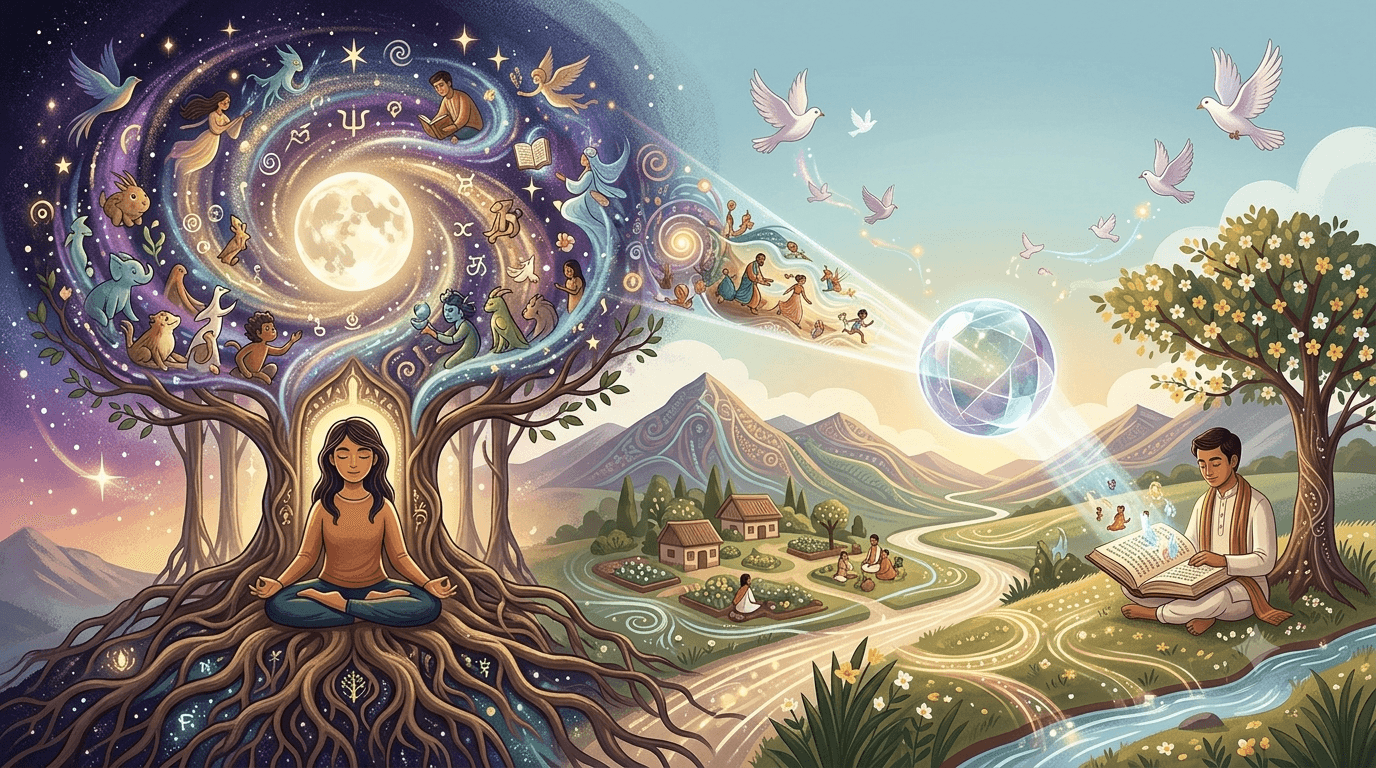
Some ideas are easy to understand when we read them. Others become clearer when we can see them, feel them and connect them to something familiar.
Spiritual learning can sometimes feel difficult for exactly this reason.
The ideas may be deep. The questions may be personal. And the language used to explain them may come from a very different time and culture.
But meaningful wisdom does not have to remain distant.
Animation can bring it closer.
For Chhahdhala, animation is more than a visual format. It is a way of creating a connection between timeless teachings and the way people learn, think and communicate today.
When Ideas Become Stories
Imagine hearing about attachment, self-awareness or the search for happiness as an abstract idea.
Now imagine seeing a character experience it.
They make a choice. They become attached to something. They experience disappointment. They question what they really want. Slowly, the idea becomes something you can recognise in your own life.
That is the power of storytelling.
Animation gives spiritual concepts a setting, characters, emotions and movement. Instead of simply receiving information, viewers can follow a journey and discover meaning along the way.
A difficult idea becomes a conversation.
A teaching becomes a situation.
And a philosophical question becomes something that feels personal.
Making Deep Ideas Easier to Approach
Spiritual learning does not necessarily need to be complicated.
Sometimes, the biggest challenge is simply knowing where to begin.
Animation can create that beginning.
Visual storytelling can introduce an idea in a way that feels natural and accessible. A child may connect with the character and story. A young person may relate to the situation. An adult may recognise a deeper question behind the same scene.
Everyone can take something different from the experience.
The teaching remains meaningful, but the path toward understanding becomes easier to follow.
Seeing Ourselves in the Story
One of the most powerful things about animation is its ability to reflect everyday experiences.
We all experience attachment.
We all look for happiness.
We all have moments when we question ourselves.
We all experience change.
When these familiar experiences appear within a story, spiritual ideas no longer feel like something that belongs only to books or classrooms.
They become connected to everyday life.
A viewer may finish an episode and think, “I have experienced something like that.”
That moment of recognition can be the beginning of reflection.
Learning Without Feeling Like a Lesson
The best learning experiences do not always feel like lessons.
Sometimes, we learn because a story makes us curious.
We want to know what happens next.
We connect with a character.
We disagree with a decision.
We start asking questions.
Animation creates space for this kind of learning.
Instead of telling viewers what they should think, a well-crafted story can encourage them to think for themselves.
What would I have done?
Why did the character react that way?
Have I ever felt something similar?
Could I look at the situation differently?
These questions can make spiritual learning more personal.
Connecting Generations Through Visual Storytelling
Another strength of animation is its ability to bring different generations into the same conversation.
Children and adults may watch the same story, but they may notice completely different things.
A child might enjoy the characters and visual journey.
A parent might notice the lesson behind the story.
A grandparent might connect it with wisdom they have encountered in another form.
That shared experience creates an opportunity to talk.
And sometimes, a conversation between generations can be just as valuable as the story itself.
Ancient Wisdom in a Modern Format
Technology has changed the way we consume information.
We watch instead of simply reading.
We interact instead of only listening.
We learn through images, stories, conversations and experiences.
That does not mean timeless wisdom needs to change.
It simply means the way we introduce that wisdom can evolve.
Chhahdhala uses animation as a modern doorway into ideas that have much older roots.
The format may be contemporary.
The questions remain timeless.
Who am I?
What truly makes me happy?
Why do I become attached?
What changes, and what remains?
How can I understand myself more deeply?
Watch. Connect. Reflect.
Animation can make spiritual learning more approachable, but its real value goes beyond making something easier to watch.
It can create a moment to pause.
A moment to question.
A moment to look inward.
The journey can be simple:
Watch → Connect → Understand → Reflect → Discover
Because spiritual learning is not only about collecting knowledge.
It is about allowing an idea to become part of the way we see ourselves and the world around us.
And sometimes, a story on a screen can be the small beginning that encourages someone to look within.
Welcome to Chhahdhala - Science of the Soul.