

Chhahdhala Is Not Just for Children. It Is for Every Generation.
A child may see a story, a teenager may recognise a struggle, and an adult may discover a deeper meaning. Chhahdhala is designed to open conversations across generations.
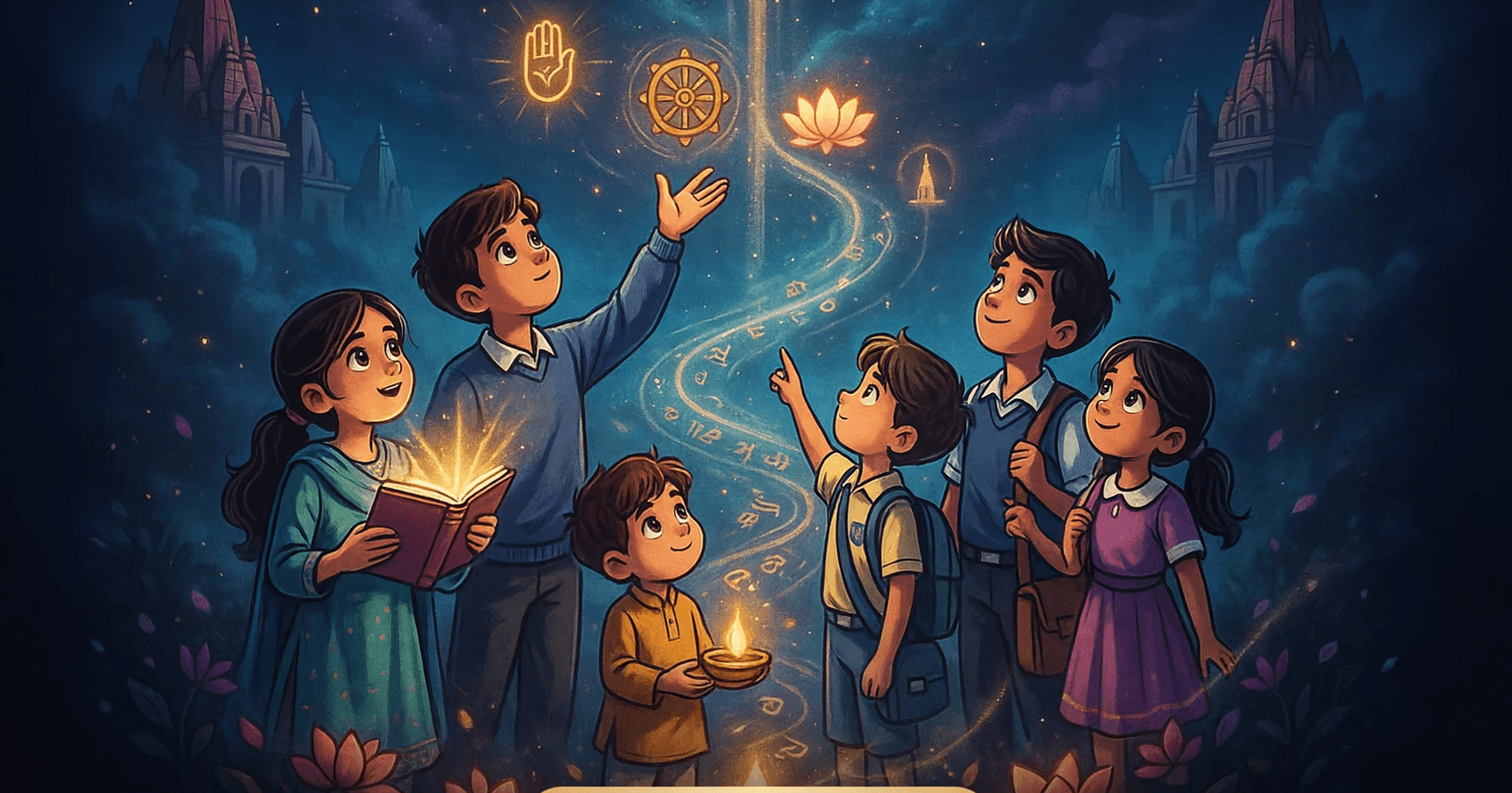
It is easy to think that spiritual learning is something children should be introduced to early in life. We often look for stories, activities and animated experiences that can help young minds understand values and important questions.
But wisdom does not have an age limit.
The questions explored through Chhahdhala are not only questions for children. They are questions that can stay with us throughout life.
Who am I?
What truly makes me happy?
Why do I become attached to certain things?
How should I respond when life changes?
What does it mean to understand myself?
These questions can mean something different to a child, a teenager, a parent or a grandparent. Yet they remain relevant at every stage of life.
A Child May Discover. An Adult May Reflect.
A child watching a Chhahdhala story may simply enjoy the characters and understand a basic lesson about kindness, attachment or happiness.
An adult watching the same story may see something completely different.
They may recognise a situation from their own life. They may think about a decision they made years ago. They may question habits they have developed or the things they depend on for happiness.
That is one of the beautiful qualities of timeless wisdom.
We do not always understand it in exactly the same way every time we encounter it.
As we grow, our experiences change. And those experiences can change the way we understand the same teaching.
Wisdom Can Grow With Us
What makes Chhahdhala meaningful for different generations is that its deeper questions can grow with the viewer.
For a young child, a story may introduce the idea of looking beyond material things.
For a teenager, it may encourage questions about identity and belonging.
For a parent, it may offer an opportunity to think about attachment, expectations and everyday choices.
For an older person, it may create space for deeper reflection on what truly matters in life.
The teaching remains the same, but the personal connection can evolve.
Learning Together as a Family
Chhahdhala can also become a shared family experience.
Instead of treating spiritual learning as something that happens only in a classroom or through books, families can watch an animated story together and simply talk about it.
What did you understand from the story?
Which character did you relate to?
Why do you think the character made that choice?
Have we ever experienced something similar?
These questions can lead to conversations between parents and children that might otherwise never happen.
A five-minute conversation after an episode can sometimes become more valuable than a long explanation.
Different Ages, Different Perspectives
One of the most interesting things about learning together is discovering that everyone sees a story differently.
A child may notice the character.
A teenager may notice the conflict.
A parent may notice the lesson.
A grandparent may connect the story with an experience from their own life.
There is no requirement for everyone to take away exactly the same message.
The conversation itself becomes part of the learning journey.
Making Spiritual Learning More Accessible
For some people, spiritual texts can initially feel difficult to approach. The language, concepts or historical context may create a barrier.
Animation can provide a gentle starting point.
Through visual storytelling, characters and relatable situations, Chhahdhala can introduce deeper ideas in a format that feels familiar to modern audiences.
This does not mean changing the wisdom to make it easier.
It means creating another doorway into it.
Once curiosity develops, viewers may naturally want to explore the teachings more deeply.
Wisdom Is Not Something We Outgrow
We often think of learning as something that prepares us for the future.
But some learning helps us understand the present.
Self-awareness, reflection, inner peace and the search for genuine happiness are not lessons that we complete once and move on from.
They remain relevant because we continue to change.
What we need to understand about ourselves at ten may not be what we need at thirty.
And what we understand at thirty may deepen further at sixty.
That is why timeless wisdom continues to have a place in every generation.
A Journey Everyone Can Take
Chhahdhala does not need to be limited to one age group.
It can be a child's first introduction to deeper questions.
It can be a family's opportunity to learn together.
It can be a young person's invitation to reflect.
And it can be an adult's reminder to pause and look within.
The journey is different for everyone, but the destination begins with the same simple act:
Taking a moment to understand ourselves.
Because wisdom is not only something we teach children.
It is something we continue to discover throughout our own lives.
Chhahdhala is not just for children. It is an invitation for every generation to watch, question, reflect and discover the journey within.