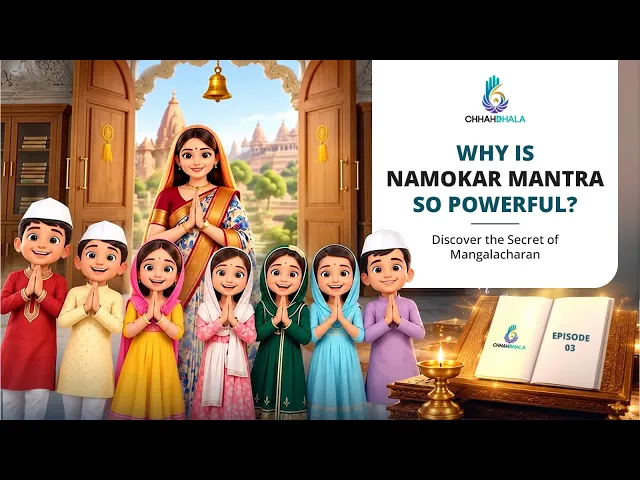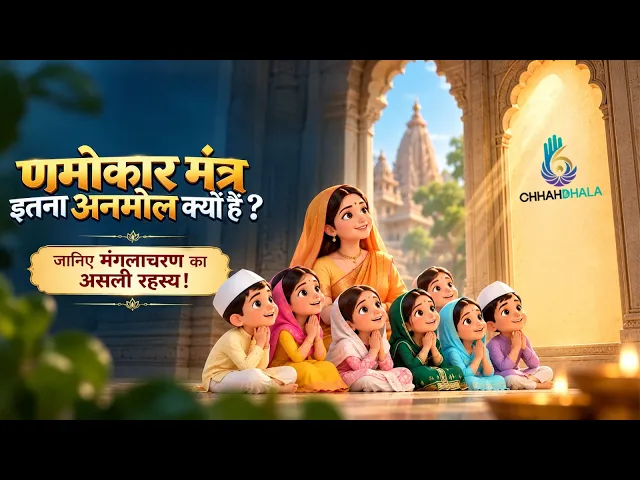


CHHAHDHALA Episode 03 | Why Is Namokar Mantra So Powerful? Discover Mangalacharan!
In CHHAHDHALA Episode 03 , “Why Is Namokar Mantra So Powerful? Discover Mangalacharan!”, viewers are invited to explore the significance of this sacred mantra and understand why it is an important part of Jain spiritual tradition.

Spiritual wisdom often begins with a simple act of reflection, a moment of silence, or a prayer that helps us connect with our inner selves. In Jain philosophy, the Namokar Mantra holds a special place because it encourages respect for spiritual excellence, humility, and the pursuit of liberation. More than a prayer recited at the beginning of religious activities, it represents a path towards self-awareness and a deeper understanding of life.
In CHHAHDHALA Episode 03, “Why Is Namokar Mantra So Powerful? Discover Mangalacharan!”, viewers are invited to explore the significance of this sacred mantra and understand why it is an important part of Jain spiritual tradition. Through accessible storytelling and meaningful explanations, Chhahdhala helps make traditional spiritual teachings easier for children, young people, and adults to understand.
What Is the Namokar Mantra?
The Namokar Mantra, also known as the Navkar Mantra, is one of the most revered prayers in Jainism. Its central purpose is to offer salutations to five categories of spiritually elevated beings, known as the Panch Parmeshthi. These include Arihants, Siddhas, Acharyas, Upadhyayas, and Sadhus.
Each category represents a different aspect of spiritual achievement, guidance, or discipline. Arihants are enlightened beings who have overcome inner enemies such as anger, pride, deceit, and greed. Siddhas are liberated souls who have attained complete freedom from karma and the cycle of birth and death. Acharyas guide and lead the Jain community, Upadhyayas teach spiritual scriptures, and Sadhus dedicate themselves to spiritual discipline and the pursuit of liberation.
The mantra does not ask for material wealth, success, or personal favours. Instead, it expresses reverence for spiritual qualities and encourages individuals to learn from those who have progressed towards self-realisation. This makes the Namokar Mantra a reminder that true greatness comes from inner purity, wisdom, discipline, and freedom from attachment.
Why Is the Namokar Mantra Considered So Powerful?
The spiritual significance of the Namokar Mantra lies in the values it represents. Its power is not simply about the repetition of sacred words but also about understanding their meaning and allowing that understanding to influence everyday behaviour.
1. It Encourages Humility
Humility is an essential foundation of spiritual growth. When individuals bow before spiritually elevated beings, they acknowledge that wisdom and inner development require effort, discipline, and self-reflection.
The Namokar Mantra reminds us that pride and ego can prevent us from learning. By cultivating humility, we become more willing to accept our mistakes, listen to others, and improve ourselves. These qualities are valuable not only in spiritual practice but also in relationships, education, and professional life.
2. It Helps Develop Inner Peace
Daily life often brings stress, disagreements, distractions, and emotional challenges. Taking a few moments to recite the Namokar Mantra with attention can provide an opportunity to pause and reflect.
Its regular recitation may help practitioners establish a peaceful routine, focus their thoughts, and approach situations more calmly. Rather than reacting immediately to every difficulty, a person can learn to create space for thoughtful responses.
The experience differs from person to person, but mindful prayer and reflection can become meaningful practices for developing emotional balance and awareness.
3. It Inspires Positive Character
The five categories honoured in the Namokar Mantra represent qualities that individuals can strive to understand and develop. Wisdom, discipline, compassion, self-control, and freedom from destructive passions are important elements of a meaningful life.
For example, a student can practise discipline by completing responsibilities honestly, while a child can demonstrate compassion by helping a classmate. Adults can apply these principles by responding to disagreements with patience and treating others respectfully.
In this way, the mantra becomes more than a religious recitation. It serves as a reminder to bring spiritual values into practical, everyday decisions.
4. It Directs Attention Towards the Soul
Jain philosophy teaches that the soul is distinct from the body, possessions, social status, and temporary circumstances. However, people often identify themselves through these external aspects and become attached to praise, success, and material achievements.
The Namokar Mantra encourages reflection on a deeper form of greatness: spiritual progress. It reminds practitioners that lasting fulfilment comes from understanding the self, reducing harmful passions, and working towards liberation.
This message is especially relevant in a world where people frequently measure their worth through possessions, appearance, and social recognition.
Understanding Mangalacharan in Jain Tradition
Mangalacharan refers to an auspicious opening invocation or salutation traditionally offered at the beginning of a spiritual text, prayer, or religious activity. It establishes a respectful and thoughtful beginning by directing attention towards spiritual values.
In Jain literature, the Namokar Mantra is frequently used as Mangalacharan because it honours the Panch Parmeshthi and expresses reverence for spiritual excellence. Beginning with such a salutation reminds readers and listeners to approach spiritual teachings with humility, attention, and an open mind.
Mangalacharan is not merely a formal introduction. It can also represent an intention to begin an activity with positive thoughts and a willingness to learn. Whether someone is studying a sacred text, participating in a religious gathering, or beginning a personal reflection, this practice encourages a purposeful state of mind.
Understanding Mangalacharan also helps younger generations recognise why traditional prayers appear at the beginning of many spiritual works. Instead of memorising words without understanding them, learners can discover the values and intentions behind the practice.
How Children and Young People Can Learn from the Namokar Mantra
Introducing spiritual teachings to children can sometimes be challenging when the concepts involve unfamiliar terminology or philosophical ideas. Chhahdhala addresses this challenge by making traditional wisdom more accessible through animation and storytelling.
The Namokar Mantra offers several practical lessons for younger audiences. Children can learn that respecting others does not mean considering themselves inferior. Instead, it means recognising good qualities and being willing to learn from people who demonstrate wisdom, kindness, and discipline.
They can also understand that controlling anger, speaking honestly, avoiding unnecessary harm, and accepting mistakes are important steps towards becoming better individuals.
Parents can support this learning by discussing the meaning of the mantra with their children rather than focusing only on memorisation. Asking questions such as, “How can we show humility today?” or “What can we learn from someone who behaves kindly?” helps connect spiritual principles with real experiences.
Through meaningful explanations, Jain animated videos can create opportunities for families to explore spiritual concepts together and make traditional teachings relevant to contemporary life.
Bringing the Teachings of Chhahdhala into Daily Life
The message of the Namokar Mantra becomes more meaningful when its principles influence our actions. Reciting the mantra can be a starting point, but its deeper significance emerges when we make conscious efforts to improve our thoughts, behaviour, and intentions.
We can practise humility by accepting feedback without becoming defensive. We can demonstrate compassion by avoiding unnecessary harm and helping people who need support. We can develop self-discipline by fulfilling our responsibilities honestly, even when doing so requires effort.
Similarly, we can cultivate self-awareness by observing our emotions instead of allowing anger, jealousy, or pride to control our decisions.
These practices do not require dramatic changes. Small, consistent efforts can gradually help us become more thoughtful and responsible in our daily lives.
Chhahdhala encourages viewers to explore these principles in a way that connects spiritual understanding with personal development. Its animated approach creates an opportunity for audiences of different ages to revisit timeless teachings and reflect on their practical meaning.
Why You Should Watch CHHAHDHALA Episode 03
CHHAHDHALA Episode 03 offers an opportunity to explore the Namokar Mantra beyond its familiar words and discover the significance of Mangalacharan in Jain spiritual literature. It encourages viewers to understand the values behind the prayer and consider how these principles can influence their everyday choices.
For children, the episode can provide an engaging introduction to Jain philosophy. For parents, it offers a starting point for conversations about humility, discipline, and self-awareness. For adults, it provides an opportunity to revisit familiar spiritual traditions and reflect on their deeper meaning.
By presenting spiritual ideas through animation and storytelling, Chhahdhala helps bridge the gap between traditional literature and modern learning preferences. It demonstrates that spiritual education can be engaging, accessible, and relevant to people across generations.
Conclusion
The Namokar Mantra is an important expression of reverence for spiritual excellence in Jainism. Through its salutations to the Panch Parmeshthi, it reminds practitioners of the value of humility, wisdom, discipline, and the pursuit of liberation. Its role as Mangalacharan also highlights the importance of beginning spiritual activities with respect and a thoughtful intention.
CHHAHDHALA Episode 03 | Why Is Namokar Mantra So Powerful? Discover Mangalacharan! invites viewers to understand the meaning behind this sacred tradition and connect its teachings with everyday life.
Watch the episode to explore the significance of the Namokar Mantra and discover how timeless Jain wisdom can inspire self-awareness, positive values, and meaningful spiritual growth in every generation.
Watch here for Hindi
Watch here for English