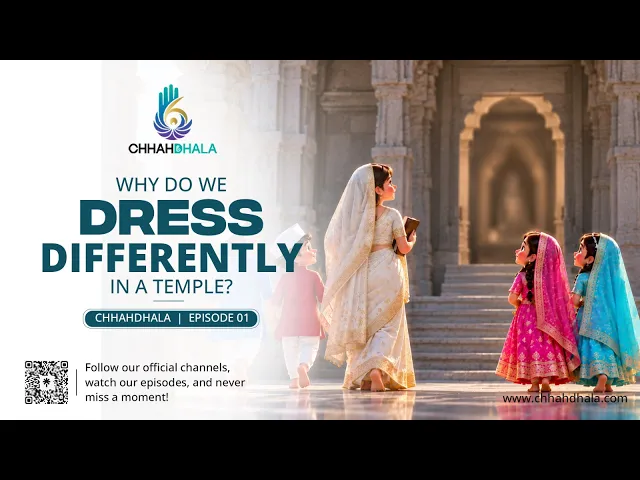


Chhahdhala Episode 02: Why Do We Dress Differently in Temples? Discover the Reason
Our clothing often changes according to the place we visit and the occasion we attend. We may wear formal clothes to work, comfortable clothes at home, and traditional outfits during festivals.

Temples are places where people seek peace, spiritual understanding, and a deeper connection with their beliefs. When we visit a temple, we often notice that people dress differently than they do in their daily lives. Some wear traditional clothes, choose simple outfits, or follow specific customs associated with worship. But have you ever wondered why clothing matters when visiting a temple? Is it simply a tradition, or does it have a deeper meaning?
Chhahdhala Episode 02: “Why Do We Dress Differently in Temples? Discover the Reason” invites viewers to explore the meaning behind temple attire and understand how everyday actions can reflect spiritual values. Through the wisdom of Jain philosophy, this episode encourages viewers to look beyond outward appearances and discover the importance of intention, discipline, respect, and inner purity.
1. Why Do People Dress Differently in Temples?
Our clothing often changes according to the place we visit and the occasion we attend. We may wear formal clothes to work, comfortable clothes at home, and traditional outfits during festivals. Similarly, many people choose simple or traditional clothing when visiting temples because they consider these places sacred.
Temple attire can express respect for the place, its traditions, and the spiritual purpose of the visit. Wearing clean and appropriate clothes may also help people feel mentally prepared for prayer, reflection, and worship.
However, the meaning of clothing goes beyond appearance. A person may wear traditional clothes and still feel distracted, impatient, or proud. Another person may dress simply while approaching worship with genuine humility and sincerity.
This reminds us that clothing can support a spiritual atmosphere, but our thoughts and behaviour remain equally important.
2. Understanding the Spiritual Meaning of Clothing
In Jain philosophy, spiritual progress is closely connected with right understanding, right faith, and right conduct. External practices can remind us of these values, but they do not replace the inner effort required to develop them.
Dressing appropriately for a temple can become a way of preparing the mind for a meaningful spiritual experience. When we consciously choose our clothing, we may also become more aware of our behaviour and the purpose of our visit.
For example, a person who enters a temple with a peaceful mind, speaks respectfully, and avoids disturbing others demonstrates consideration for the sacred environment.
The important lesson is that clothing should not become a reason to judge others. Spiritual understanding encourages us to examine our own conduct rather than measure another person's devotion by appearance alone.
3. What Does Jain Philosophy Teach Us About Outer and Inner Purity?
Jain philosophy places great importance on the purity of the soul and the removal of attachments that keep us away from spiritual understanding.
Outer cleanliness and appropriate clothing may be useful practices, but inner purity involves something deeper. It requires awareness of our thoughts, intentions, emotions, and actions.
Anger, pride, greed, and excessive attachment can influence how we treat others. Therefore, spiritual development involves learning to recognise these tendencies and gradually overcome them.
Consider two people visiting a temple. One is concerned mainly with wearing the finest clothes and receiving attention from others. The second wears simple clothes and focuses on prayer, reflection, and self-improvement. Their outward appearances may differ, but the example encourages us to ask an important question: what is the purpose behind our actions?
The lesson is not that attractive or traditional clothing is wrong. Rather, it is that external appearance should not become more important than inner awareness and sincere conduct.
4. Temple Etiquette: Respect Beyond Clothing
Respecting a temple involves more than selecting suitable clothes. Our behaviour, attitude, and awareness also contribute to the peaceful atmosphere of a sacred place.
Some useful practices include:
Wear clean and appropriate clothing: Follow the customs of the particular temple you visit.
Maintain cleanliness: Help keep the temple surroundings clean and orderly.
Speak respectfully: Avoid unnecessary noise and conversations that disturb others.
Follow temple traditions: Observe the established practices and instructions of the place.
Practise humility: Visit with a willingness to learn rather than to display status or wealth.
Respect other visitors: Avoid judging people based on their clothing, background, or personal circumstances.
These simple actions can make temple visits more meaningful. They also help children and young people understand that respect is demonstrated through behaviour, not merely through appearance.
5. How Can Parents Teach Children the Meaning Behind Temple Attire?
Children often learn religious customs by observing adults. They may notice that their family wears particular clothes when visiting a temple, but they may not understand why the practice exists.
Instead of simply telling children what to wear, parents can explain the values behind the tradition. They can discuss respect, cleanliness, self-discipline, humility, and consideration for others.
For example, before visiting a temple, parents might explain that wearing clean and suitable clothing helps show respect for the place. They can also remind children that being kind, speaking gently, and keeping the surroundings clean are equally important.
These conversations help children understand that traditions are more meaningful when they know the values they represent.
Animated educational content can make such discussions easier. Through relatable questions and storytelling, Chhahdhala helps introduce spiritual ideas in a way that encourages curiosity and thoughtful learning across generations.
6. Looking Beyond Appearances
One of the most important lessons from this topic is that appearances do not reveal the complete nature of a person. Clothing can communicate respect for a tradition, but it cannot independently determine someone's character or spiritual progress.
Jain teachings encourage individuals to develop self-awareness and examine their own conduct. Rather than becoming overly concerned with how others appear, we can focus on whether our thoughts and actions reflect compassion, honesty, humility, and self-control.
This understanding is particularly relevant today, when people are often judged by their clothes, possessions, and social status. A spiritual perspective reminds us to look deeper and recognise the importance of values that cannot be measured through external appearance.
When we understand the purpose behind a tradition, we can practise it with greater awareness instead of following it mechanically.
7. Discover the Message of Chhahdhala Episode 02
Chhahdhala brings traditional spiritual wisdom into everyday conversations by exploring questions that children, young people, and adults can understand. The question of temple attire becomes an opportunity to discuss a much broader idea: the relationship between external practices and inner development.
The episode encourages viewers to think about why traditions exist, what they teach us, and how we can apply their values in daily life. It also reminds us that spiritual learning becomes meaningful when it influences our attitude and behaviour beyond the temple.
By combining storytelling with spiritual reflection, Chhahdhala aims to make timeless teachings more accessible to a new generation while keeping their deeper message alive.
Conclusion
Why do we dress differently in temples? For many people, temple attire expresses respect for sacred surroundings and helps create a suitable atmosphere for worship and reflection. Yet the deeper lesson is that clothing alone does not define devotion or spiritual understanding.
Through the theme of Chhahdhala Episode 02: “Why Do We Dress Differently in Temples? Discover the Reason,” viewers are encouraged to explore the values behind traditions and recognise the importance of inner purity, humility, and respectful conduct.
When we understand the purpose behind our actions, even a simple everyday practice can become an opportunity for learning. The real value of a temple visit lies not only in what we wear, but also in the awareness, respect, and sincerity we bring with us.
For Hindi: कृपया इस लिंक पर क्लिक करें और अभी देखें!
For English: Please click the link below and watch now!